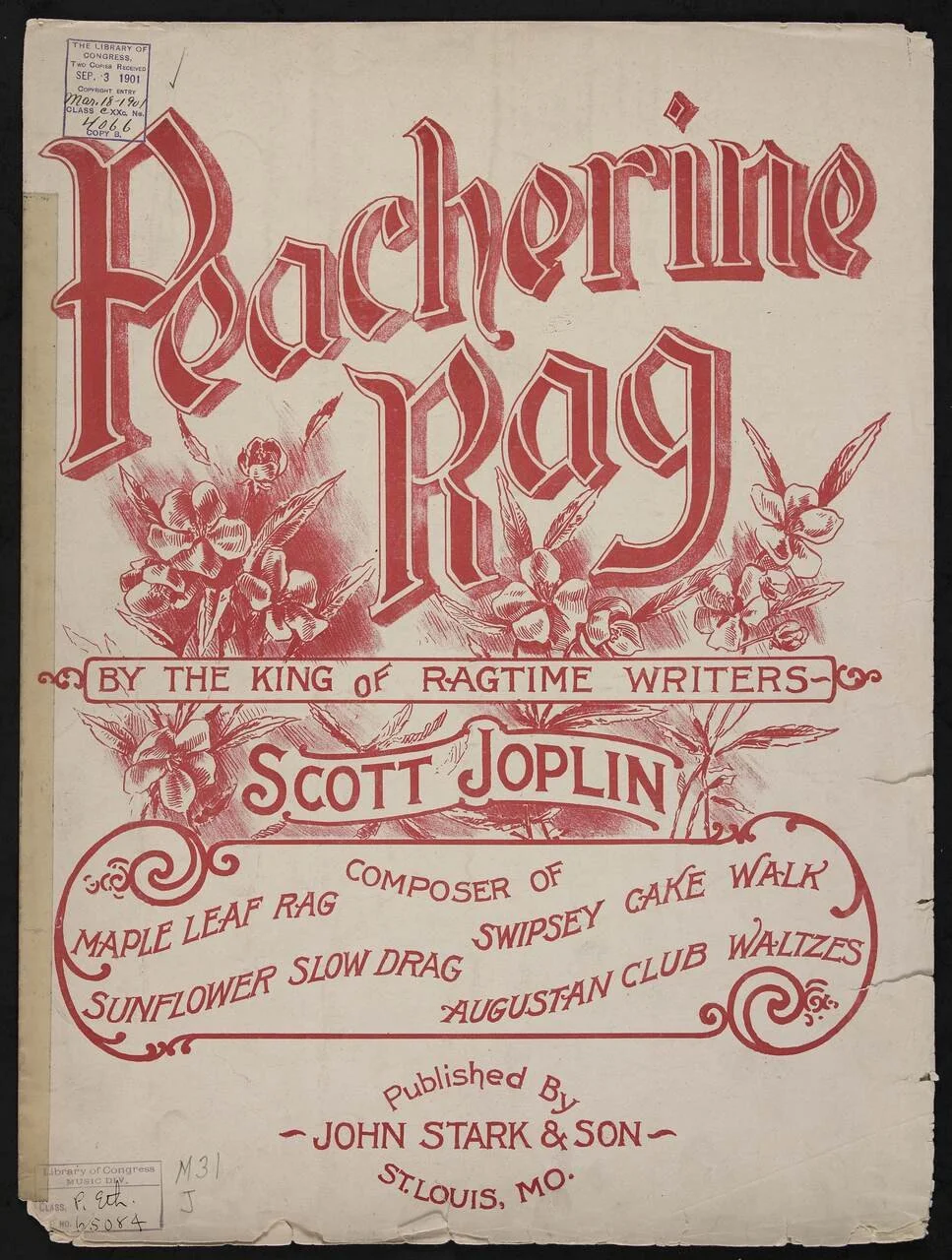
October 2026 - "Peacherine Rag"
Scott Joplin’s Peacherine Rag, published in 1901 by John Stark & Son, is one of the lesser-known compositions by the composer widely known as the “King of Ragtime.” It appeared only a few years after Maple Leaf Rag had established Joplin as one of the leading composers of the emerging ragtime style. Like Joplin’s other classic rags, Peacherine Rag combines a syncopated melody over a foundation of a steady march-like rhythym. The original sheet music even carries the simple instruction “Not too fast,” a reminder that the music’s rhythmic character depends more on precision and bounce than sheer speed.
Read More
September 2026 - "Dry and Dusty"
In January of 1987, Sandy Conatser, a lifelong resident of Nashville, Tennessee, went in search of a dulcimer instructor for herself and a friend. Sandy's friend was a dulcimer player whose teacher had left Nashville, but Sandy had never even seen a dulcimer. She found the name David Schnaufer on a community education flyer and decided to give him a call and ask about private lessons. Little did she know that the call she was about to make was like looking for someone to paint a house and connecting with Michelangelo!
Read More
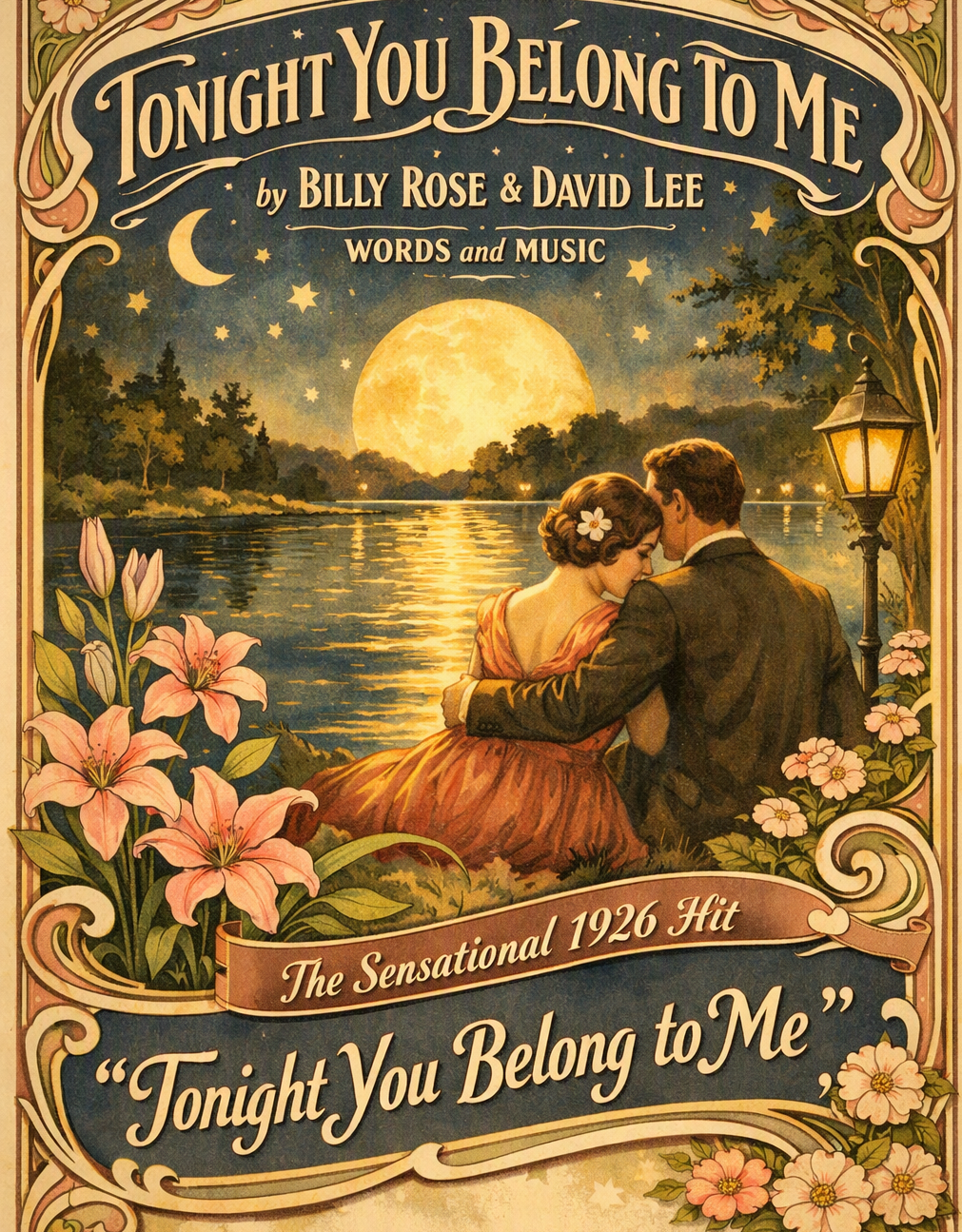
August 2026 - "Tonight You Belong to Me"
This month’s free tab is an arrangement of the Tin Pan Alley-era tune “Tonight You Belong to Me”. Composed 100 years ago in 1926 by lyricist Billy Rose and composer David Lee (aka Lee David) it is a prime example of the type of sentimental ballads and romantic duets that were immensely popular at the time and have also survived into current pop culture. Its first major success came through recordings by Gene Austin and Irving Kaufman, both of whom helped establish it as a standard of the period. Over the decades since, “Tonight You Belong to Me” has been revived by many performers. A 1956 recording by sisters Patience and Prudence McIntyre became the best-known modern version, reaching the Billboard charts and introducing the song to a new generation.
Read More