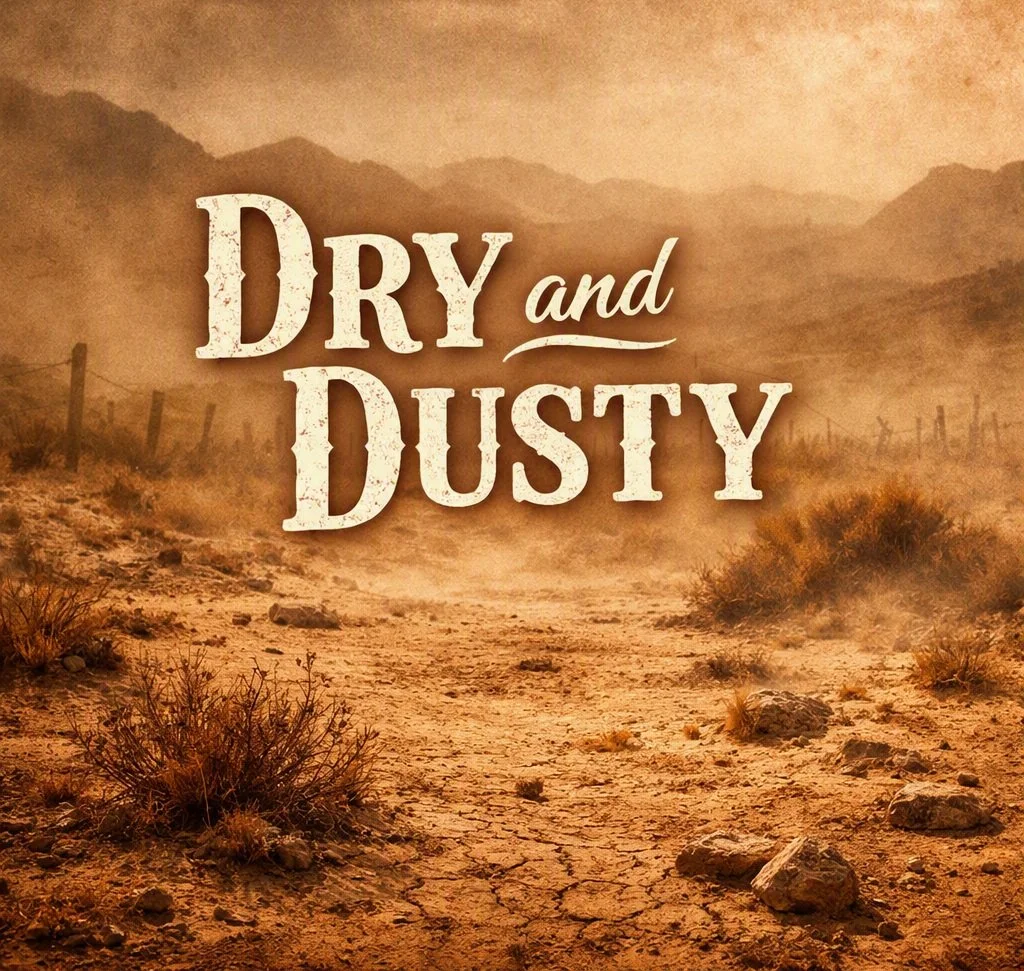
September 2026 - "Dry and Dusty"
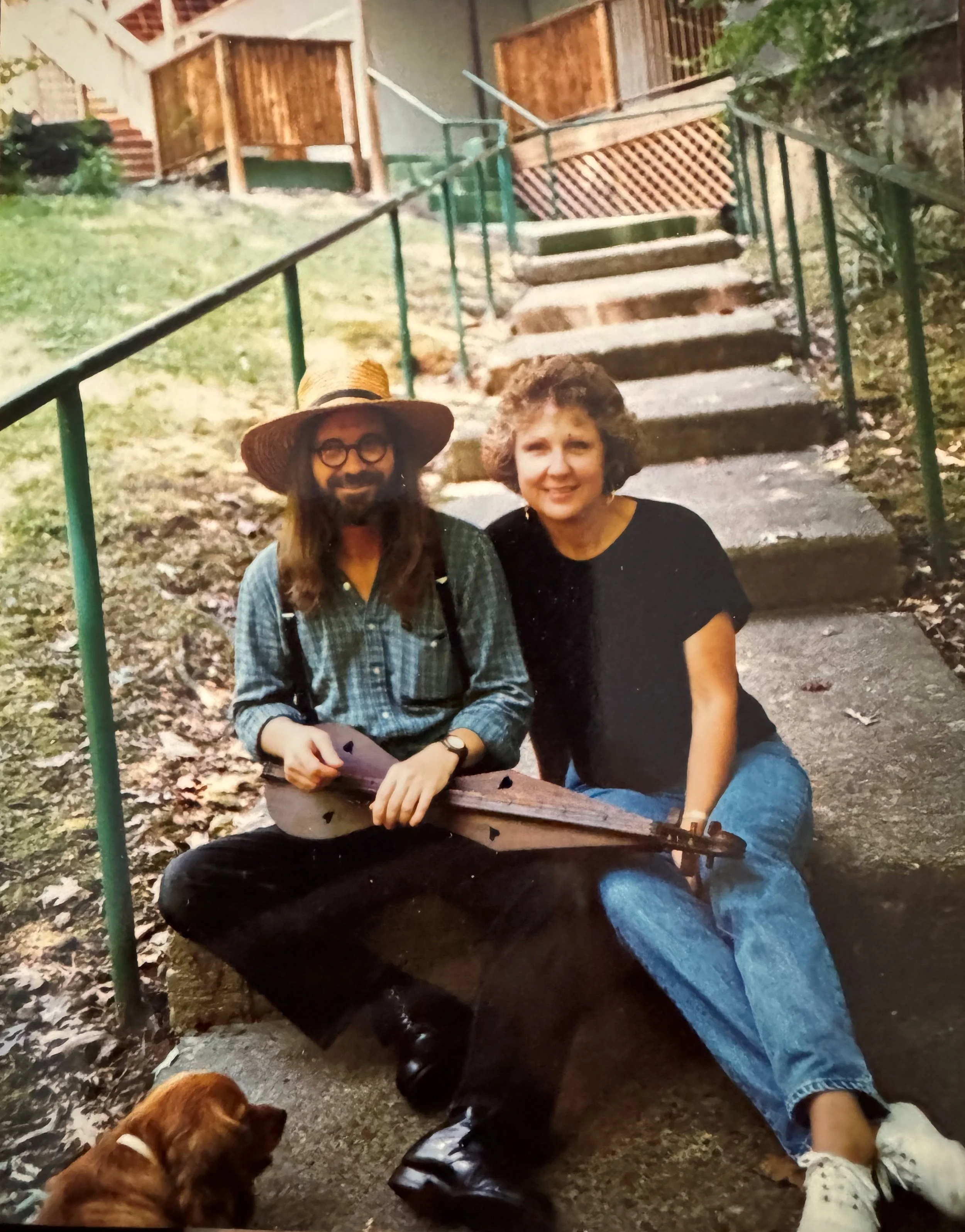
David and Sandy ca. 1996
In January of 1987, Sandy Conatser, a lifelong resident of Nashville, Tennessee, went in search of a dulcimer instructor for herself and a friend. Sandy's friend was a dulcimer player whose teacher had left Nashville, but Sandy had never even seen a dulcimer. She found the name David Schnaufer on a community education flyer and decided to give him a call and ask about private lessons. Little did she know that the call she was about to make was like looking for someone to paint a house and connecting with Michelangelo!
Sandy borrowed a dulcimer and made that call. When she asked him what book she should buy to bring to the lesson, David told her that she didn't need a book and that he taught by ear. That idea unsettled her, and she insisted that "she had no ear". After a brief back-and-forth, David said, "Well, you probably do, so why don't you come and take a couple of lessons and we'll find out." Sandy still wasn’t convinced, but she decided to take a lesson anyway. After that very first lesson, she walked out astonished. She had learned by ear—really learned—and she knew David had been right all along. Under David’s tutelage, Sandy progressed quickly. In 1998, she was one of the four students David invited to form the Nashville Dulcimer Quartet. In later years, she collaborated with David in a research project to unearth and formally catalog as many of the old Tennessee Music Box instruments as they could find.
At the end of each lesson, David would make a cassette tape recording of the tunes and techniques they had just gone over so she would have something to listen to and practice along with until their next lesson. Sandy recently re-discovered some of those recordings, and has been gracious enough to share them.
One of the tunes that David taught her was an old fiddle tune titled “Dry and Dusty”. The tune has deep roots in the Ozark tradition but took on new life as it traveled through Texas and Kentucky fiddlers. It was first collected in the Ozark Mountains by folklorist Vance Randolph in the early 1930s, with versions recorded from Arkansas fiddlers like Lon Jordan and the Morrison Twin Brothers String Band. In these Ozark versions, the tune typically had two parts (AABB). Local lore says fiddlers would play “Dry and Dusty” as a signal they needed a drink during a dance. Others suggest the title reflects the drought and dust endured by settlers in the region.
The tune spread westward, appearing in the repertoire of Texas fiddler Eck Robertson, and later Benny Thomasson. Thomasson’s style emphasized elaboration and variation, and his version expanded the tune beyond the simpler Ozark form. Kentucky fiddler J.P. Fraley learned “Dry and Dusty” from Thomasson’s playing. Fraley’s interpretation carried Thomasson’s influence but retained his own lyrical Kentucky style. This is the version that David Schnaufer picked up and made part of his repertoire. The version David played—via Fraley and Thomasson—stood out because it had four distinct parts, unlike the standard Ozark two‑part form. This expanded structure gave the tune more variety that reflects the Texas contest style’s love of complexity and the Kentucky tradition’s lyrical phrasing.
Here’s a link to a YouTube video that uses the original cassette tape recording of the tune that David made for Sandy as the soundtrack:
I have included two versions of the arrangement. The first is a transcription of the way David first taught it to Sandy during one of her early lesson sessions. The other is a closer reflection of the version he learned from J P Fraley, including some enhanced chording options.
Enjoy, and as David would say, “Keep on pickin’!”
In music and friendship,
~Tull
As a reminder, shortly after David’s untimely passing in 2006, Deb Porter started the “Dulcimers for David” project. Its goal is to honor David’s memory and continue his vision by providing dulcimers to young people who have expressed an interest in playing but may not have a means of getting an instrument of their own. To support that effort, a number of CDs and DVDs have been produced, and 100% of the sales of those items go to support the project.
Costs related to maintaining this website to provide these monthly tabs continue to rise. If you can, please consider making a donation to help offset some of these costs. Thank you!